
Subee Cardenas
Subee is the Conference Coordinator of WHSL and Marketing Director of BuyLow Warehouse.
Join the WHSL Community
Stay up to date on upcoming events, industry news, and resources designed for liquidation and wholesale businesses.
More From Subee Cardenas

Aug 19, 2025

Aug 13, 2025

Aug 7, 2025
Aug 7, 2025
USPS Financial Crisis: How a Shutdown Could Impact Online Resellers
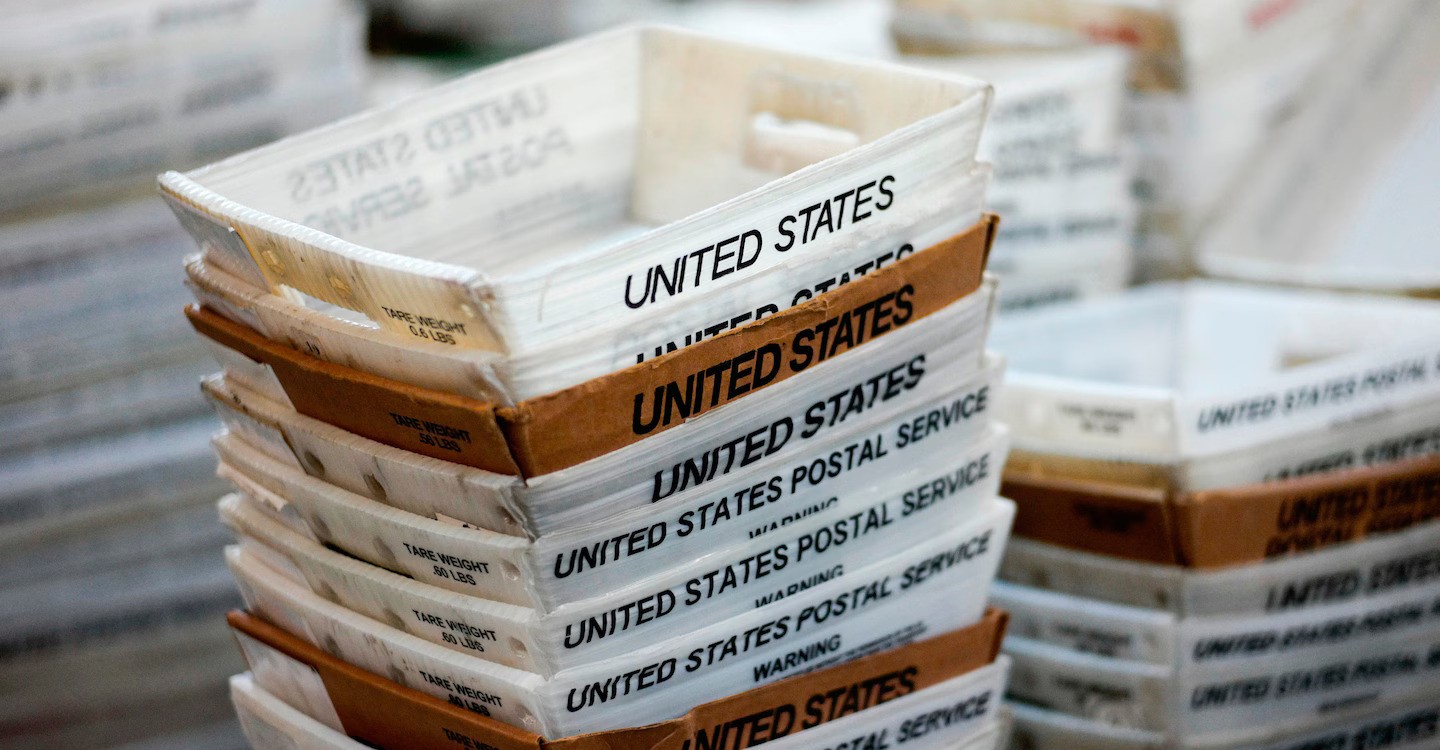
USPS faces major financial trouble. Learn how the USPS crisis could impact eBay sellers, Etsy shops, Whatnot streamers, and liquidation resellers who rely on low cost shipping. What Happens If USPS Shuts Down? If the United States Postal Service shut down or significantly reduced operations, the resale industry would face several immediate challenges: Shipping costs for small packages would increase significantly. Many rural sellers could lose access to affordable shipping options. Platforms like eBay, Etsy, and Whatnot would need to rebuild shipping integrations. Liquidation resellers could see profit margins shrink due to higher delivery costs. USPS currently provides the lowest cost shipping option for many lightweight packages. Because of that, the resale economy depends heavily on the postal network remaining stable.
Mar 26, 2026

The United States Postal Service faces a serious financial crisis. For resellers, liquidation buyers, and online sellers, that crisis matters.
Many businesses depend on USPS every day. eBay sellers, Whatnot streamers, Etsy shops, and liquidation resellers all rely on affordable shipping to move inventory.
USPS leadership recently warned Congress about the situation. Without major reforms or new borrowing authority, the agency could run out of cash within the next year.
Shipping supports the entire resale economy. If that support weakens, the entire market feels the impact.
There is no reason for panic today. But this is a situation that resellers should begin watching closely.
Why USPS Is Facing Financial Trouble
USPS has struggled financially for years.
Since 2007, the agency has reported about $118 billion in net losses.
The largest problem comes from declining First Class Mail volume. First Class Mail historically produced the highest margins for USPS. As digital communication replaced physical mail, demand fell sharply.
Mail volume today sits near levels last seen in the late 1960s.
USPS also operates under strict financial limits. Congress capped the agency's borrowing authority at $15 billion, and USPS has already reached that limit.
In testimony to lawmakers, USPS leadership explained the risk clearly. Without an increase to the borrowing cap or structural reform, the agency could run out of operating cash within the next year.
If that happened, USPS could be forced to suspend operations.
Why the USPS Crisis Matters for Resellers
For the resale industry, USPS is not just another shipping carrier. It is core infrastructure.
Most online resale businesses depend on low cost shipping for small packages. USPS built its pricing around exactly that type of shipment.
The numbers show how deep this dependency runs.
More than 75 percent of items sold on eBay in the United States ship through USPS.
91 percent of Etsy sellers rely on USPS, according to testimony from Etsy's CEO.
Whatnot generates USPS Ground Advantage labels automatically for many sellers.
Whatnot has also built in app scanning tools to work around USPS scan delays, which shows how closely the platform depends on postal infrastructure.
A complete USPS shutdown would have consequences beyond online resale. Analysts estimate a shutdown could threaten 600,000 jobs and disrupt many essential services across the country.
For small packages, USPS pricing still leads the market.
A 12 ounce package shipped across the country costs about $4 to $5 with USPS First Class.
The same shipment with UPS or FedEx usually starts between $9 and $12, before residential delivery surcharges of roughly $5 per package.
For many resale businesses, that price difference determines whether a sale makes money or loses money.
What Happens If USPS Disappears
Shipping Costs Would Increase Quickly
UPS and FedEx focus on commercial logistics. Their pricing structures reflect that.
Residential delivery fees, dimensional weight pricing, peak season surcharges, and extended delivery area charges all add cost.
These additional fees can increase the final shipping price 30 to 50 percent above the base rate.
For resellers selling $10 to $20 items on eBay or Whatnot, those numbers break the business model.
USPS pricing supports the most common resale items such as:
trading cards
collectibles
clothing
books and media
accessories
UPS and FedEx pricing does not prioritize these types of shipments.
Rural Sellers Would Face the Biggest Challenge
USPS delivers to every address in the United States.
That includes P.O. Boxes, which UPS and FedEx often cannot serve.
Many resellers live and operate in rural communities. A large portion of the eBay and Etsy seller base comes from small towns.
For these sellers, USPS is sometimes the only viable shipping option.
If USPS reduced service coverage or shut down operations, many rural sellers could lose access to national online marketplaces.
Marketplace Systems Would Be Disrupted
Modern resale platforms depend heavily on USPS infrastructure.
Marketplaces such as eBay, Whatnot, and Etsy have built deep USPS integrations including:
discounted label pricing
automatic tracking uploads
scan based seller protection policies
in app shipping tools
USPS scan data also supports important marketplace metrics.
These include:
seller performance ratings
shipping compliance metrics
buyer protection claims
delivery tracking visibility
If USPS suddenly stopped operating, those systems would break overnight.
The disruption would affect more than shipping prices. It would affect the entire post sale experience across resale platforms.
The Impact on Liquidation Resellers
For liquidation buyers, the impact could be even larger.
Liquidation reselling often involves high volume and low margin inventory. Shipping costs play a major role in profitability.
A common liquidation model looks like this:
Purchase pallets or truckloads of inventory
Sort items individually
List products on marketplaces such as eBay or Poshmark
If shipping costs doubled, many profitable sourcing strategies could become unprofitable immediately.
For liquidation resellers, USPS pricing helps keep the resale math working.
What Shipping Alternatives Exist
Right now, there are few true replacements for USPS pricing.
UPS Ground and FedEx Ground are the most obvious alternatives. Both carriers include residential delivery surcharges and dimensional weight penalties. Both companies also implement regular annual rate increases.
UPS and FedEx each implemented 5.9 percent general rate increases for 2025.
USPS also raised prices in 2026. Ground Advantage increased by about 7.8 percent on average. Even after that increase, USPS still leads on price for packages under one pound, which represents most resale shipments.
Some newer alternatives are expanding.
Amazon Shipping continues to grow its delivery network and plans to expand service to 4,000 smaller towns by the end of 2025. However, Amazon Shipping is generally limited to sellers shipping Amazon marketplace orders.
Regional carriers such as OnTrac and GLS are also expanding. These carriers often highlight lower peak season surcharges as a selling point.
However, their geographic coverage remains much smaller than USPS.
Today, USPS offers something no private carrier fully replicates:
nationwide delivery coverage
no residential delivery surcharge
pricing optimized for lightweight consumer goods
If that system disappeared, it would reshape the economics of online resale.
What Resellers Should Watch
The USPS situation continues to evolve. Congress has not yet approved changes to USPS borrowing authority, and postal reform often becomes politically complex.
Resellers should monitor several developments.
Congressional action
Watch for hearings or legislation related to USPS borrowing limits or structural reform.
Shipping rate increases
USPS has increased shipping rates roughly 6 to 8 percent per year. That trend will likely continue.
Service reductions
Possible measures include fewer delivery days, slower transit times, or closures of smaller post offices.
Marketplace adjustments
eBay, Etsy, Whatnot, and other platforms may expand shipping integrations or negotiate bulk rates with other carriers.
Growth of alternative carriers
Amazon Shipping and regional delivery companies will likely expand if USPS reliability weakens.
How Resellers Can Prepare
A complete USPS shutdown remains uncertain. Still, smart businesses prepare before disruption happens.
Resellers can take several steps now.
Build Relationships With Multiple Carriers
If USPS handles most shipments today, begin testing UPS, FedEx, and regional carriers. Understanding pricing and delivery speed today makes future transitions easier.
Use Multi Carrier Shipping Platforms
Shipping software such as Pirate Ship, ShipStation, EasyPost, and Shippo allows sellers to compare multiple carriers in one dashboard. These tools help identify the most affordable option if USPS availability changes.
Review Product Mix
If shipping costs rise across the industry, lightweight products will remain easier to sell profitably. Resellers should review how shipping costs affect their current inventory mix.
Communicate With Buyers
If shipping disruptions occur, clear communication builds trust. Updating handling times and setting realistic delivery expectations helps maintain buyer confidence.
Explore Local Sales Options
Some sellers may reduce shipping dependence by offering local pickup or hybrid online and local sales models.
Closing Thoughts
The USPS funding crisis shows how dependent the resale industry has become on affordable shipping infrastructure.
For decades, USPS provided the foundation that allowed small sellers to compete in national marketplaces. A person selling trading cards from a small town could reach buyers across the country for just a few dollars in shipping.
That system helped power the modern resale economy.
The future of USPS is still uncertain. Congress may raise the borrowing limit or introduce reforms that stabilize the agency but at the same time, rising shipping costs and shifting logistics networks could reshape the industry over time.
For resellers, liquidation buyers, and small online businesses, the most important takeaway is awareness.
Shipping is not just a logistics detail, it's a core part of the business model, and resellers who understand the changing shipping landscape can adapt early and will be better positioned to navigate whatever changes come next.